The significance and impact of medieval trade routes
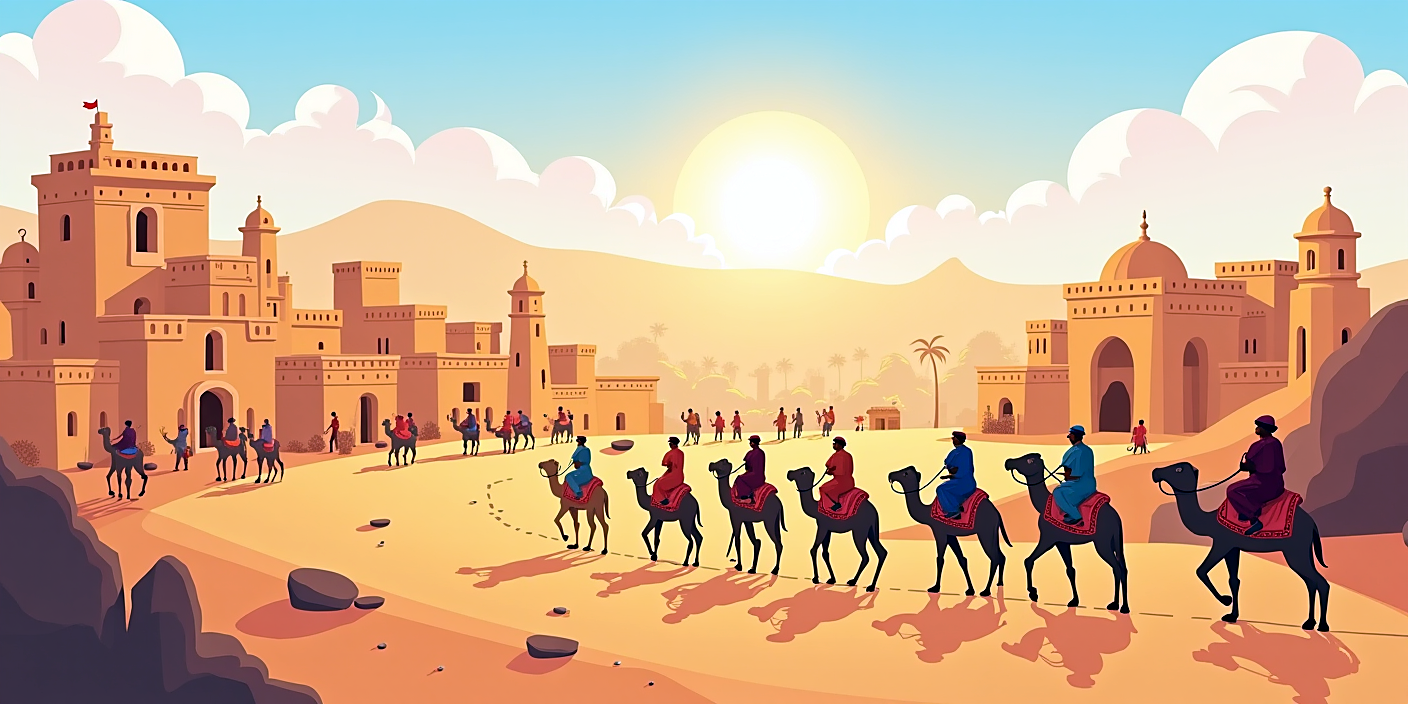
The Silk Road contributed greatly to economic and cultural development and strengthened international relations.
The Importance of Trade Routes in the Middle Ages
In the Middle Ages, trade routes were an important part of economic life. Through them, various goods, cultures, and ideas were exchanged between different regions. During this period, trade routes played a significant role in strengthening mutual relations and contributing to economic development.
Trade routes consisted mainly of land and sea paths, which helped establish trade connections between different areas and countries.
Main Trade Routes
In the Middle Ages, there were several important trade routes. Below are some examples:
- Silk Road (Silk Route) - The most significant trade route between Asia and Europe.
- Spice Route (Spices Route) - A path that transported spices from India and the Near East to Europe.
- Amber Road (Amber Route) - A road stretching from northern parts of Europe down south, used for transporting valuable amber goods.
Through these routes not only goods were exchanged but also cultures and knowledge. As a result, trade centers and cities developed.
Social and Cultural Impact of Trade Routes
Middle Ages trade routes played an important role not just economically, but also socially and culturally. They facilitated cultural exchanges between different nations.
In addition, trade routes contributed to the following social changes:
- Cultures and traditions from various ethnic groups influenced each other.
- During the Middle Ages, the social status of merchants increased and new social layers emerged.
FAQ
How did trade routes function in the Middle Ages?
In the Middle Ages, trade routes were managed by traders who transported goods from one region to another. During this process various payments and tax systems existed.
Which goods were exchanged through trade routes?
The main trade routes facilitated exchange of silk, spices, precious stones, metals and other various goods.
What caused the development of trade routes?
The development of trade routes was related to economic demand, need for new markets and cultural exchanges. During this process political and social factors also played an important role.
What was the significance of Silk Road?
Silk Road or Silk Route was the most significant trade route between Asia and Europe, serving not only as a channel for goods exchange but also contributing to culture and scientific exchanges.
Who were Middle Ages merchants?
Middle Ages merchants were mainly people living in cities and villages who often traded together with their families or tribes.
Conclusion
The trade routes of the Middle Ages have contributed greatly not only to economic but also to cultural development. Through them, relations between different peoples were strengthened and they occupied an important place in human history.