Virtual reality: new opportunities and advantages in education
Virtual reality makes the teaching process interactive and effective, creating new opportunities for students.
Introduction
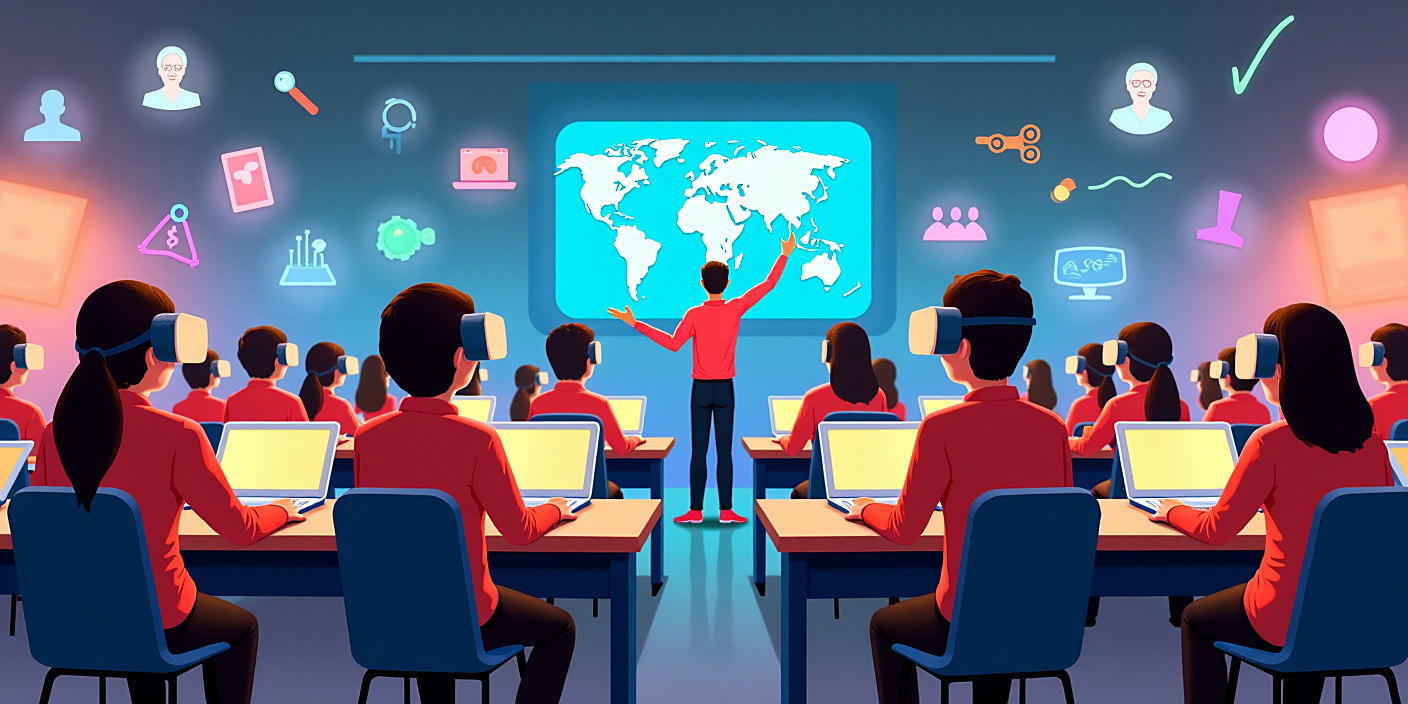
Virtual reality (VR) technology has created new opportunities in the field of education in recent years. With this technology, students can gain the opportunity to apply their knowledge in practice.
VR makes the educational process more interactive and interesting, which increases students' motivation to learn. In this article, we will provide detailed information about the role of virtual reality in education and its advantages.
Advantages of Virtual Reality in Education
The virtual reality technology provides an opportunity to make the learning process more efficient. Below are its main benefits:
- Interactivity: Students can test their knowledge in practice within a virtual environment.
- Engaging Learning: The process of studying complex topics becomes much more interesting and understandable with VR.
In addition, VR technology gives teachers the opportunity to manage the learning process more effectively. This helps improve the quality of education.
Practical Applications of Virtual Reality
There are several practical applications of virtual reality technology in education. They are listed below:
- Laboratory experiments: Students can conduct experiments in virtual laboratories.
- Studying historical sites: With VR, students have the opportunity to take a virtual tour of historical places.
- Vocational training: In fields such as engineering or medicine, students can learn their profession through virtual simulations.
These opportunities enrich the learning process and help students develop new skills.
Virtual Reality in Education in the Future
In the future, it is expected that the role of virtual reality technology in education will expand further. It may develop in the following directions:
- New platforms: VR platforms specifically created for education are likely to increase.
- Hybrid learning: The combination of traditional and virtual teaching methods is expected to become more widespread.
These developments will help make the educational process even more efficient and interesting.
FAQ
What is virtual reality?
Virtual reality refers to a user's ability to feel present in a virtual environment created through computer technologies.
How is VR applied in education?
VR is used in education through interactive experiences, simulations and virtual tours.
What are the advantages of virtual reality?
VR makes the learning process more interesting and efficient, encouraging students to participate actively.
In what devices can virtual reality be used?
Virtual reality can be used with special VR devices, computers and mobile phones.
What challenges exist in VR education?
The high cost of VR technology and the need for additional training for teachers may lead to challenges.
Conclusion
Virtual reality is bringing revolutionary changes to the field of education. With this technology, students can test their knowledge in practice, making the learning process even more interesting and effective.
In the coming years, it is expected that the application of VR technology in education will expand further, which will significantly improve the learning process for students.